Bulk Enzymes for Shrimp Shell Processing Plants
Carapax Flow supplies bulk enzyme systems for shrimp shell processing plants that need predictable chitin extraction performance at production scale. Our focus is operational: improve deproteinization, reduce odor pressure, support cleaner sidestreams, and help plants reduce dependence on aggressive chemical correction.
If you are looking for an enzyme supplier for chitin extraction, the question is not whether enzymes work in a lab. The question is whether the enzyme program fits your shell feedstock, wash quality, reactor conditions, separation equipment, chemical sequence, and batch schedule.
Carapax Flow builds around those realities.
[Embedded faceless explainer video: enzyme roles across shrimp shell washing, protein release, chitin conditioning, and sidestream recovery]
Enzyme support by process stage
Shrimp shell processing is not one reaction. It is a chain of physical, chemical, and biological effects. Enzyme selection should match the stage where the plant needs control.
| Process stage | Operational problem | Enzyme role | Buyer value |
|---|---|---|---|
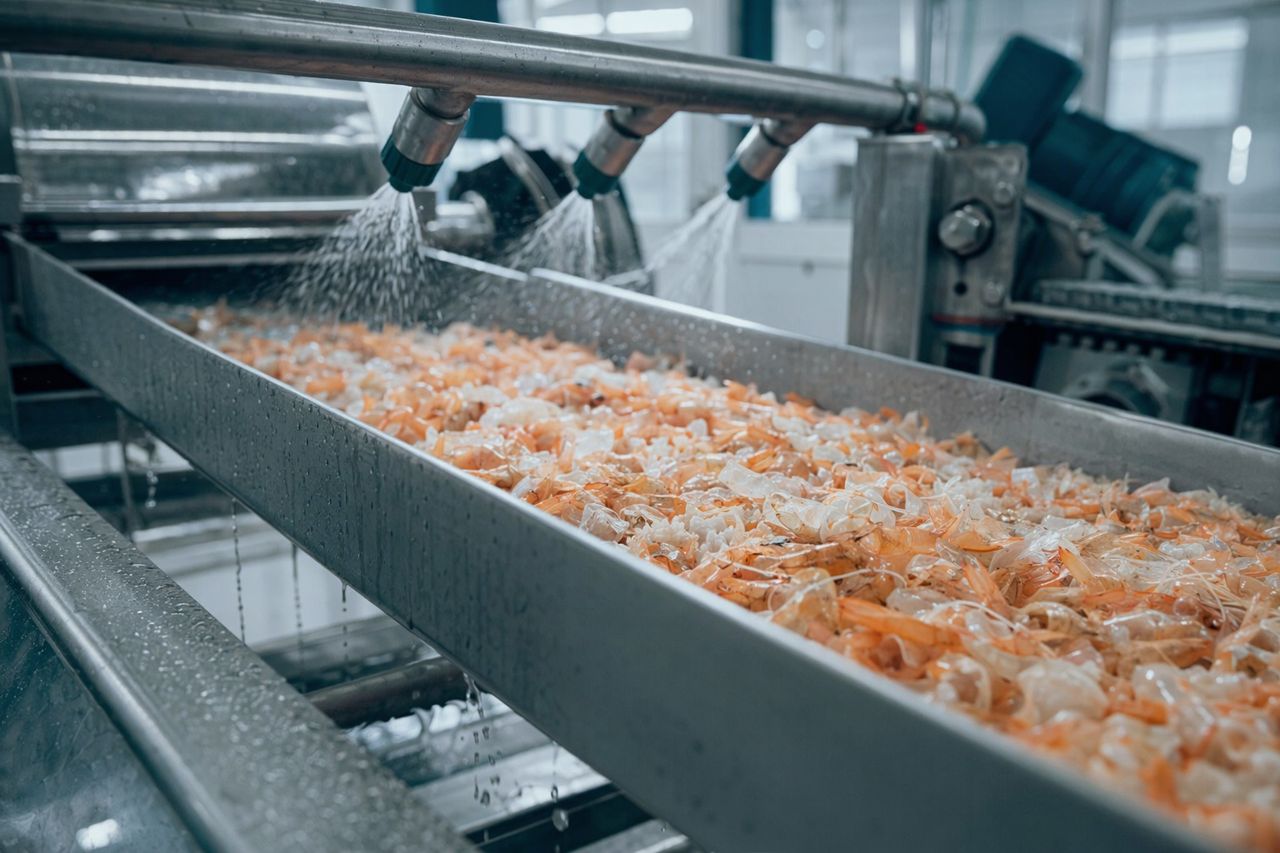
| Shell washing | Residual meat, slime, soluble organics, early odor formation | Loosen proteinaceous residues before main extraction | Lower incoming organic burden and steadier prep batches |
| Fat control | Greasy liquor, surface films, odor persistence, handling issues | Lipase support for fat-associated residues | Cleaner liquor behavior and better downstream handling |
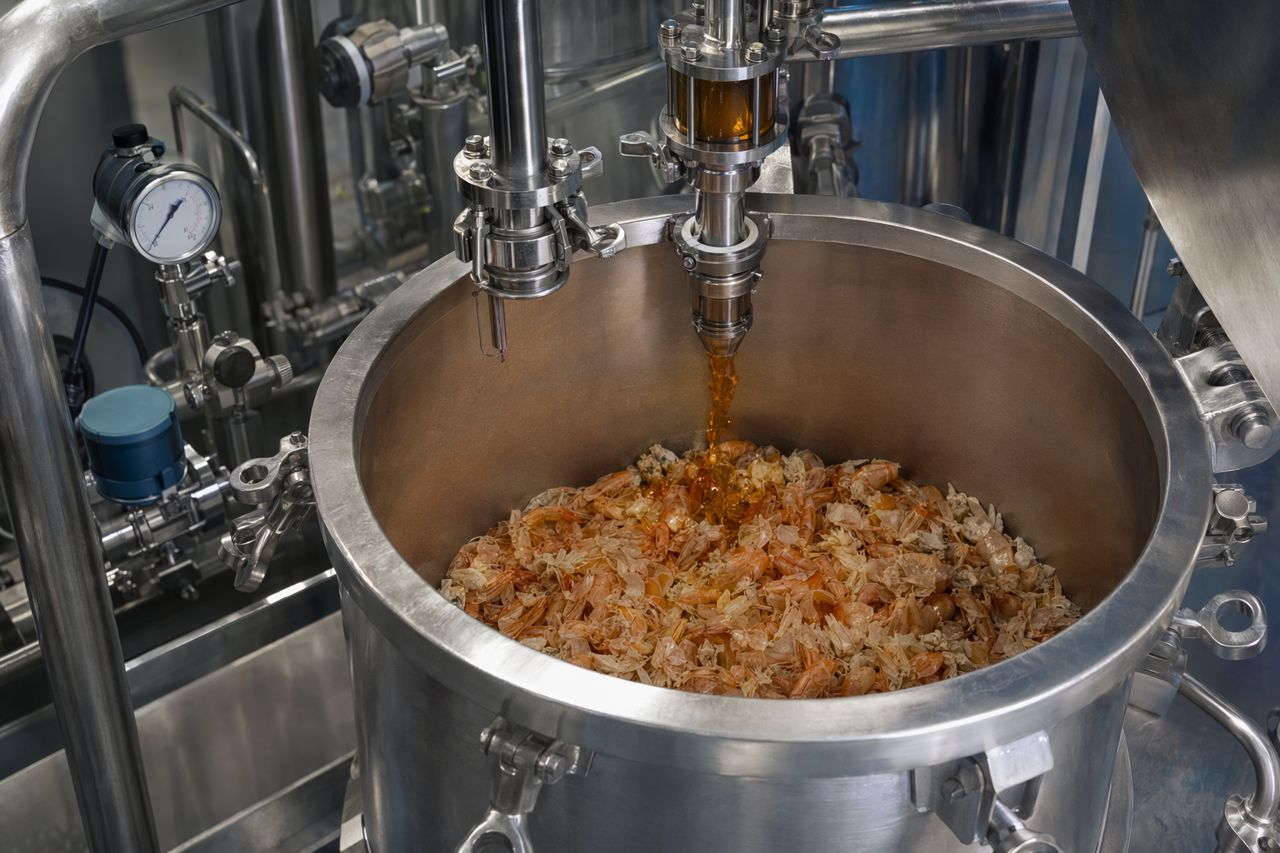
| Protein removal | Incomplete deproteinization, variable shell batches, high chemical demand | Protease-led systems to release bound and residual proteins | Improved chitin purity path, lower correction pressure, better batch consistency |
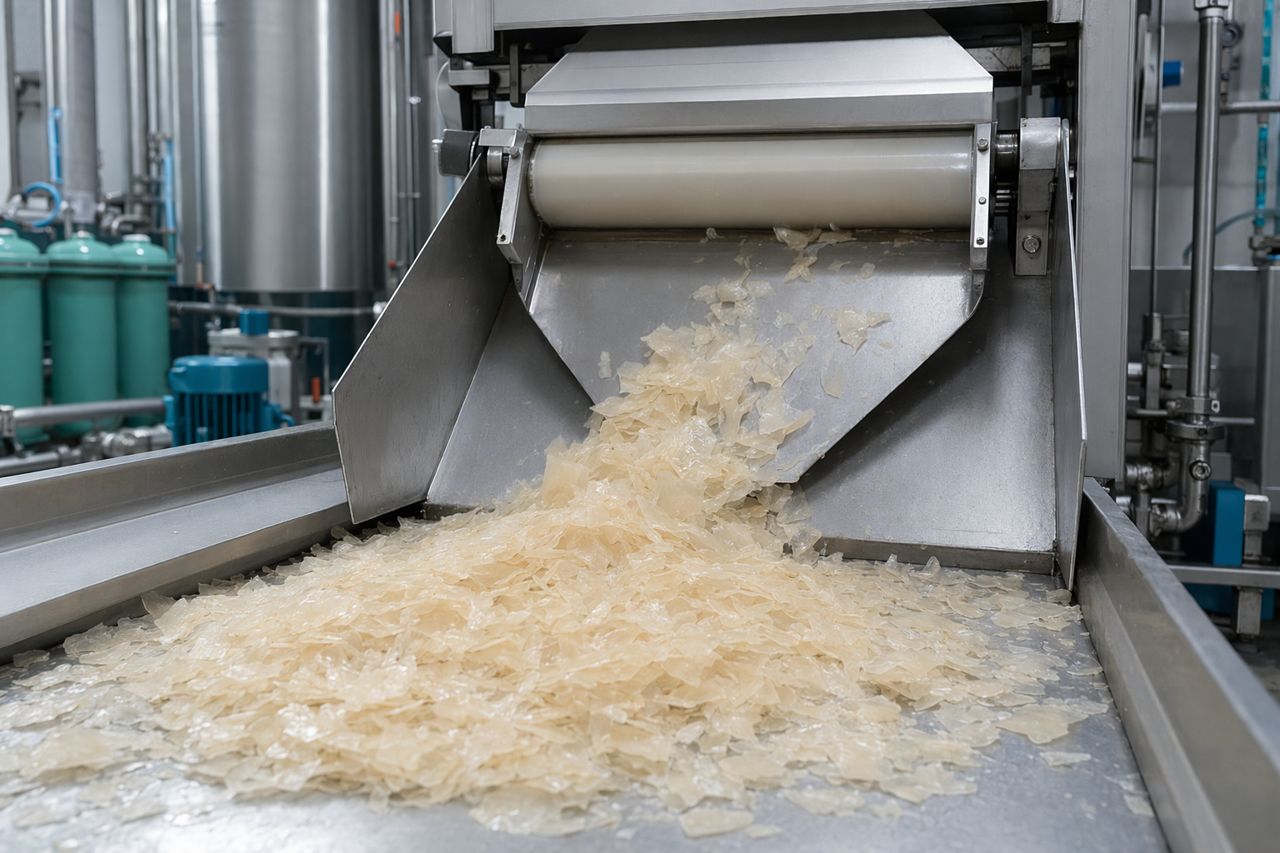
| Chitin conditioning | Darker flakes, uneven texture, filtration difficulty | Targeted enzyme treatment before or between chemical steps | More uniform flake quality and smoother solid-liquid separation |
| Sidestream recovery | Protein-rich liquor treated as waste | Enzymatic release of recoverable solubles | Better value capture and reduced waste load potential |
Built for plant conditions, not perfect feedstock
Shrimp shell inputs shift by season, species mix, freshness, storage time, and upstream peeling conditions. A reliable enzyme program must tolerate that variation without forcing your operators into constant adjustment.
Carapax Flow evaluates the practical variables that shape performance:
- Shell particle size and residual meat load
- Wash water quality, brine carryover, and salinity
- Batch or continuous reactor layout
- Temperature window and hold time available
- pH profile across washing, enzymatic treatment, alkali, and acid stages
- Mixing intensity and solids loading
- Separation method, filtration behavior, and liquor handling
- Odor control requirements and plant discharge limits
We supply bulk enzyme solutions aligned with those constraints, so the program supports production rather than complicating it.
Protease-led deproteinization support
Protein removal is the main value driver for most chitin extraction operations. Strong deproteinization helps produce cleaner chitin flakes and can reduce the need for overcorrection in downstream chemical stages.
Carapax Flow protease systems are selected for practical plant outcomes:
- More consistent release of shell-bound and residual proteins
- Reduced variability between shrimp shell lots
- Support for lower chemical load where process conditions allow
- Improved liquor separation behavior when paired with the right operating window
- Better control over odor-generating residues before they become a plant-wide issue
The aim is not to replace your full extraction process overnight. The aim is to strengthen the biological step so the chemical steps do less emergency work.
Lipase support for fat, film, and odor pressure
Shrimp shell streams can carry fats and surface residues that interfere with washing, create film, and contribute to odor. Lipase support can be useful when plants see greasy liquor, floating films, or persistent smell after washing.
Used correctly, lipase can help:
- Break down fat-associated residues on shell surfaces
- Improve liquor uniformity before separation
- Reduce odor pressure linked to residual organic load
- Support cleaner handling in tanks, screens, and piping
Carapax Flow does not recommend unnecessary enzyme complexity. If fat is not a limiting factor in your plant, we keep the program focused. If it is limiting throughput or quality, we include it deliberately.
Chitin conditioning before final separation
Chitin flake quality depends on more than deproteinization percentage. Plants also care about color, texture, filterability, washing behavior, and consistency from batch to batch.
Enzyme conditioning can support a cleaner transition into later extraction and finishing steps by helping remove remaining organic residues and loosening the shell matrix without excessive mechanical abuse. This is especially useful when plants process mixed shell streams or handle material that has spent too long before extraction.
Typical operational targets include:
- Pale, more uniform chitin flakes
- Easier washing and separation
- Lower risk of stubborn protein residues
- Better consistency before drying, milling, or further chitosan conversion
Sidestream value and waste load reduction
Protein-rich liquor is often treated as a disposal burden, but it can also be a recoverable sidestream depending on plant configuration and local requirements. Enzymatic release can improve the consistency of soluble protein streams, making recovery discussions more practical.
Carapax Flow can support plants evaluating:
- Protein liquor clarification
- Reduced organic waste load
- More predictable sidestream composition
- Integration with existing wastewater or recovery equipment
We keep this grounded in your actual plant economics. If recovery is viable, we help build toward it. If the priority is discharge control, we focus there first.
What Carapax Flow supplies
Carapax Flow provides bulk enzyme supply for industrial shrimp shell processing, including protease-led deproteinization systems and optional lipase support where fat control is operationally relevant.
Our buyer value is straightforward:
- Bulk supply for production use
- Technical matching to your feedstock and process window
- Practical guidance for staged dosing and integration
- Reliable procurement communication
- Support for yield, throughput, odor control, and batch consistency goals
We do not sell hype. We supply process tools for plants that need their extraction line to run cleaner and more predictably.
Request a quote
Tell us what your plant is processing, where the bottleneck sits, and what outcome matters most: stronger deproteinization, lower chemical pressure, odor reduction, improved flake quality, sidestream recovery, or supply reliability.
Request a quote through the on-site form and Carapax Flow will respond with a bulk enzyme recommendation framework for your shrimp shell processing line.