Wastewater load starts before the drain
In a shrimp shell processing plant, wastewater load is not a single end-of-pipe problem. It is built step by step through raw shell condition, washing practice, particle preparation, deproteinization, demineralization, separation, and cleaning routines.
For plant managers, the question is operational: where are protein, fat, and minerals being transferred from shell into water, and can that transfer be made more controlled?
Carapax Flow works with processors looking for an enzyme supplier for chitin extraction where the goal is not just better shell conversion, but a more stable production environment: improved deproteinization performance, lower chemical burden, reduced odor pressure, and more consistent batches.
The main contributors to wastewater load in chitin extraction
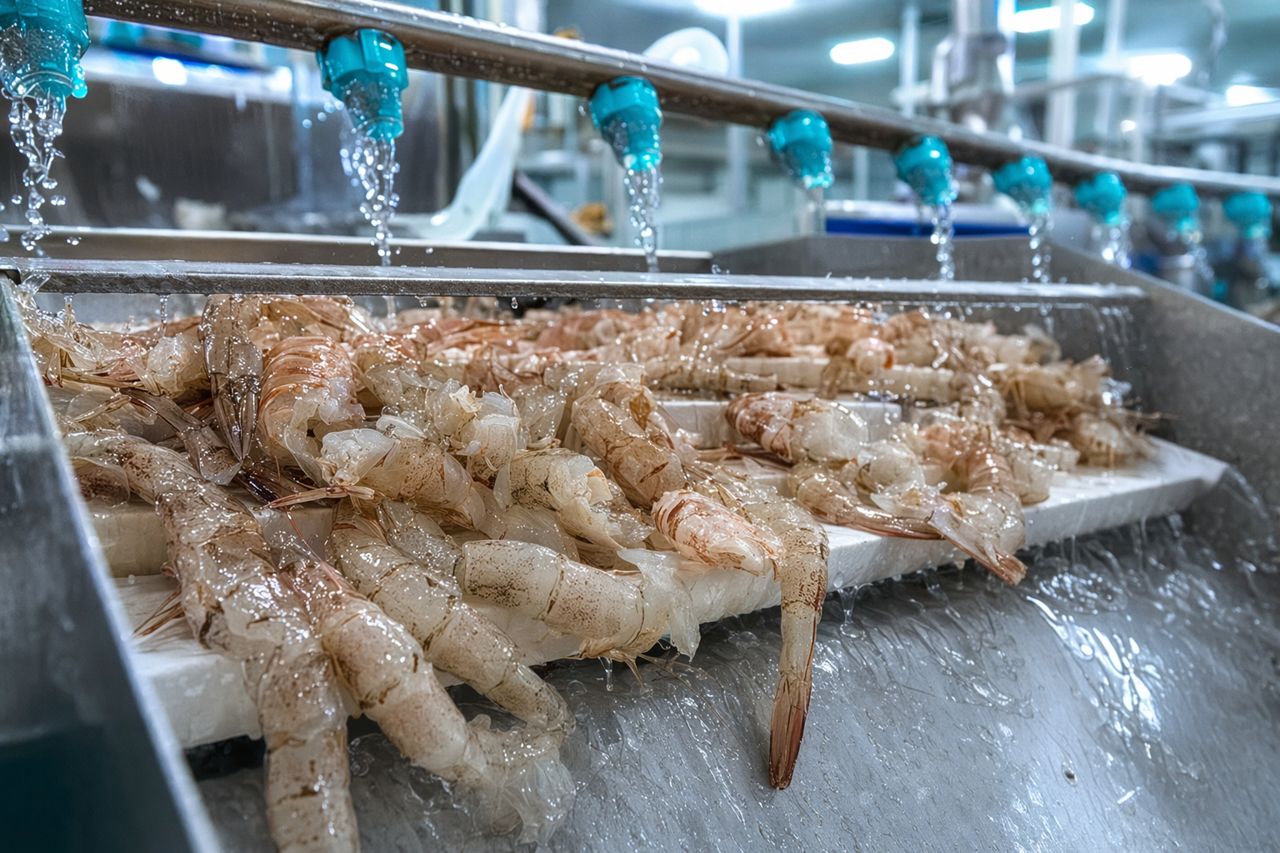
Shrimp shells carry multiple fractions into the plant:
- Protein bound to the chitin-mineral matrix
- Residual tissue and soluble nitrogen compounds from head and shell material
- Fat and pigments associated with marine biomass
- Calcium minerals released during acid treatment
- Fine shell particles generated during handling, grinding, and agitation
- Cleaning residues from tanks, conveyors, screens, and piping
Each fraction behaves differently. Some settle. Some float. Some remain suspended. Some dissolve into process liquor and move directly to wastewater treatment. The more aggressive the extraction step, the more difficult it can be to keep those streams predictable.
Where protein enters the wastewater stream
Protein is one of the highest-impact contributors to organic load. In conventional alkaline deproteinization, protein is rapidly detached and solubilized. That can be effective for removal, but it may also create strong liquors, odor, foaming, and heavier demand on downstream treatment.
Protein load often increases when:
- Shell lots vary in freshness or residual meat content
- Grinding creates excessive fines
- Alkaline conditions are pushed to compensate for inconsistent raw material
- Residence time is extended to chase deproteinization targets
- Separation equipment is overloaded or poorly timed
The plant may still achieve acceptable chitin output, but the wastewater system absorbs the inconsistency.
Fat and marine residues: smaller fraction, larger nuisance
Fat and associated marine residues may be lower in volume than protein, but they can cause practical problems. Greasy films, floating solids, odor, and fouling can interfere with settling, filtration, and housekeeping.
These issues are often amplified when shell material is not processed quickly, when wash water is reused without control, or when hot chemical steps release organics faster than separation can handle them.
A more controlled deproteinization step can help reduce the tendency to over-process the batch. That matters because over-processing does not only remove target material; it can also mobilize more unwanted load into the liquid stream.
Minerals: the acid-side load that still affects operations
Demineralization releases calcium salts into the process liquor. While this mineral load is different from protein-based organic load, it still affects wastewater volume, neutralization demand, solids formation, and disposal cost.
Plants that rely on stronger upstream chemical treatment may face a chain effect:
- More caustic demand in deproteinization
- More neutralization pressure later
- Higher salt load in wastewater
- More difficult sludge and liquor management
- Less flexibility when raw material quality shifts
Reducing chemical severity where possible can support a more balanced extraction train.
Why enzyme-assisted deproteinization changes the wastewater discussion
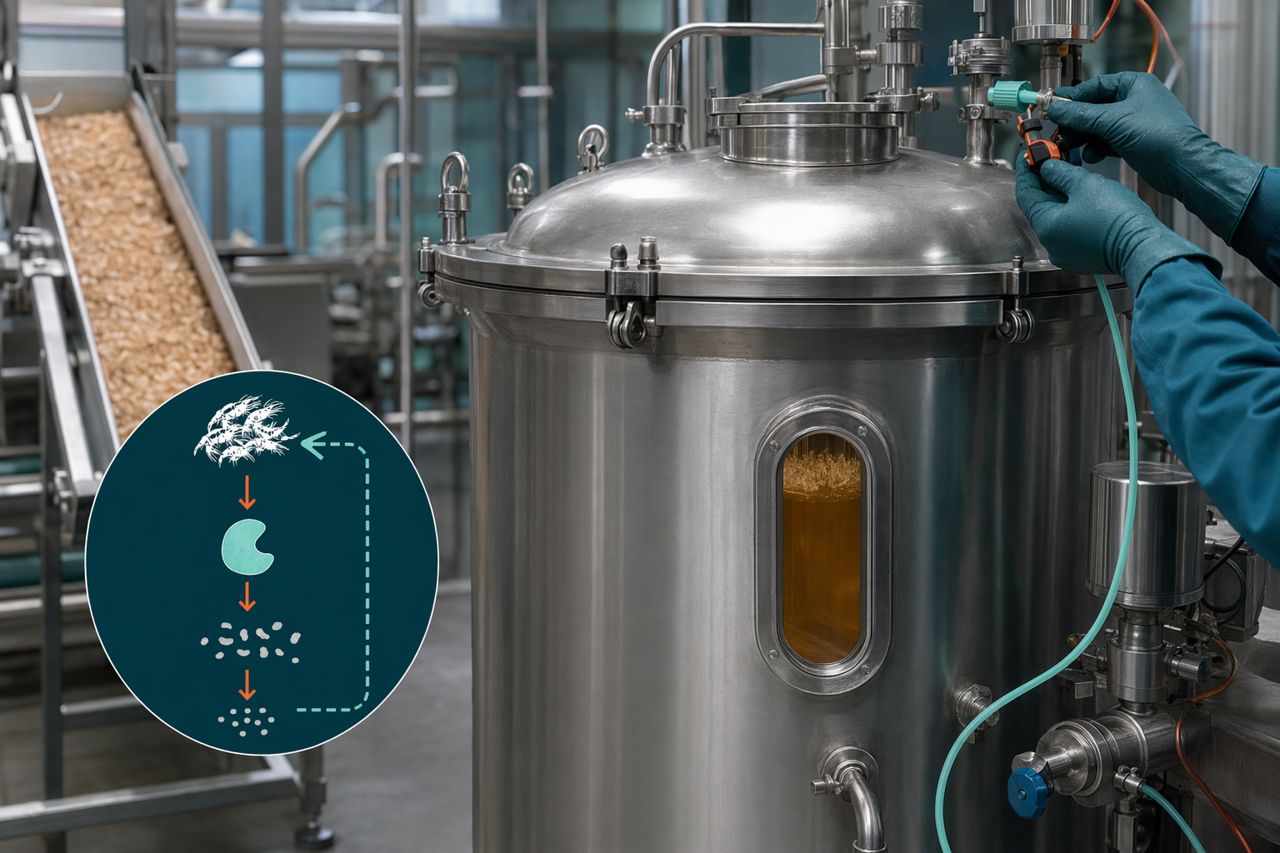
Enzyme-assisted deproteinization is not only a chitin yield tool. It is also a process control tool.
Targeted protease action can release protein under milder operating conditions, allowing plants to reduce reliance on harsh chemical correction. The benefit is not magic. It comes from a more selective mechanism that supports controlled protein release instead of broad chemical attack.
For a plant manager, the practical advantages can include:
- More predictable deproteinization performance
- Lower chemical load entering wastewater treatment
- Reduced odor pressure in hot processing areas
- Better batch-to-batch consistency across variable shell lots
- Cleaner separation behavior when solids, liquor, and fines are managed well
- More room to tune the process without disrupting downstream equipment
The critical control points to review
Before changing chemistry, review the points where load is created or concentrated.
1. Raw shell receiving
Freshness, residual meat, head-to-shell ratio, and storage time influence the amount of protein and fat that can enter wastewater. Poor incoming control often forces the extraction line to compensate later.
2. Washing and brine handling
Rinsing removes soluble material before extraction, but excessive or poorly staged washing can create unnecessary wastewater volume. The objective is not simply more water. It is controlled removal with a consistent feed to the reactor.
3. Particle preparation
Grinding increases surface area, but over-reduction creates fines that travel through screens and carry protein into wastewater. Particle consistency supports both enzyme contact and mechanical separation.
4. Deproteinization control
This is the main decision point for enzyme use. Enzyme selection, dosing strategy, mixing quality, temperature window, and hold time all influence how efficiently protein is released and how cleanly the liquor separates.
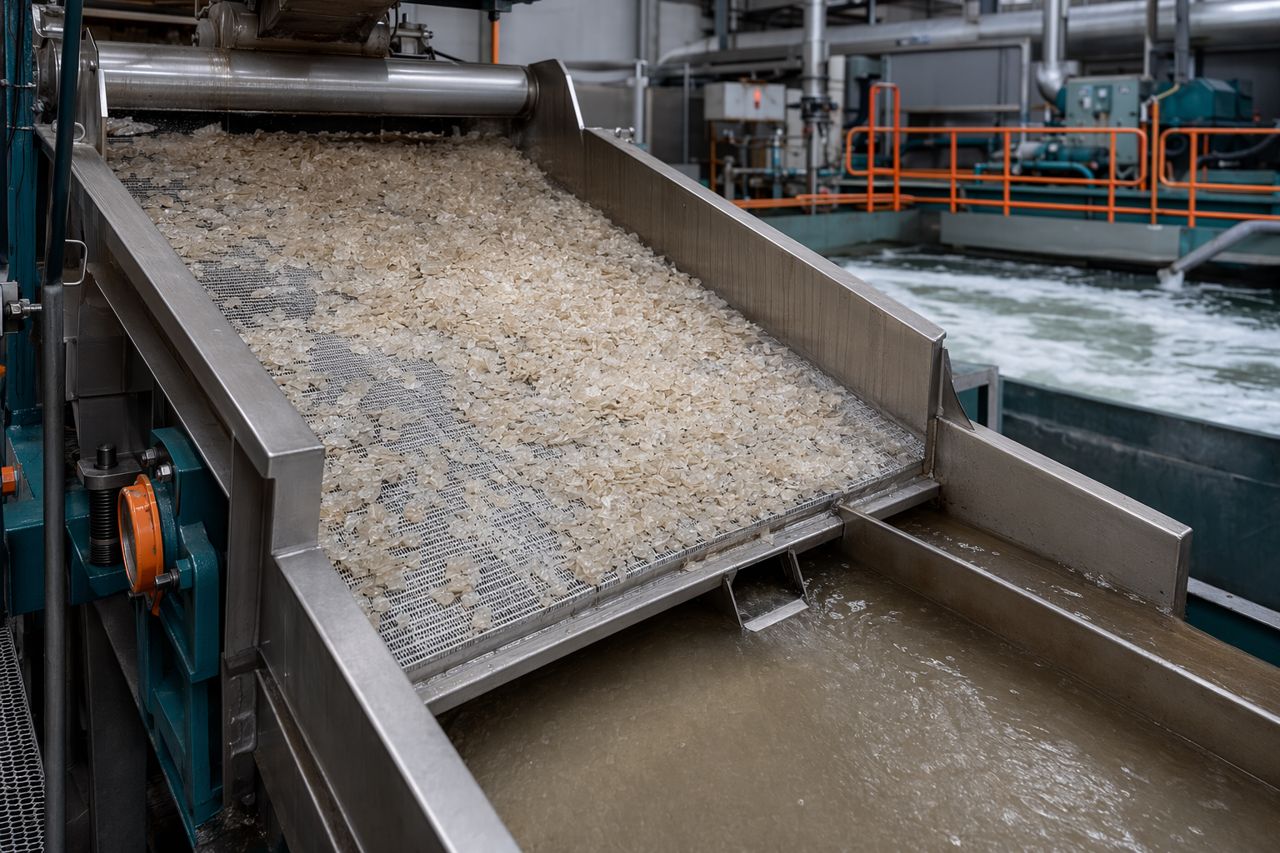
5. Solid-liquid separation
Poor separation converts recoverable solids into wastewater load. Screens, decanters, presses, and settling steps should be reviewed as part of the enzyme program, not after it.
6. Demineralization and neutralization
Acid-side mineral release must be planned together with alkaline or enzyme-assisted protein removal. A cleaner upstream deproteinization step can make downstream control more stable.
What Carapax Flow supplies
Carapax Flow supplies enzyme solutions for shrimp shell processors that need dependable plant-scale support, not generic biotech claims.
Our work is focused on:
- Protease systems suited to chitin extraction workflows
- Process-fit guidance for existing stainless tanks and separation equipment
- Lot-to-lot supply reliability for production planning
- Practical support around deproteinization, odor control, and chemical reduction
- Clear communication for purchasing, operations, and technical teams
We do not treat wastewater load as an isolated problem. We look at how shell quality, reaction control, and separation performance interact across the line.
Signs your plant may benefit from an enzyme review
An enzyme-assisted deproteinization review may be useful if your plant is seeing:
- High wastewater treatment pressure during peak shell intake
- Strong odor around deproteinization or holding areas
- Variable chitin quality between raw material lots
- Excess chemical use to maintain deproteinization targets
- Liquor separation that changes from batch to batch
- Production limits caused by wastewater or sludge handling
- Difficulty scaling from trial batches to continuous production schedules
The right enzyme program should fit the plant. It should not require operators to rebuild the process around a laboratory idea.
A practical way forward
For shrimp shell processors, reducing wastewater load starts with understanding where load is generated. Protein, fat, and minerals do not enter the drain by accident. They are released by specific process decisions.
Enzyme-assisted deproteinization gives operators another lever: controlled protein release with less dependence on severe chemical conditions. When combined with disciplined washing, particle control, and separation, it can help the plant run cleaner and more consistently.
If wastewater load is limiting throughput or driving chemical cost, Carapax Flow can review your shell stream, current process steps, and supply requirements.
Request a quote through the on-site contact form and include your raw material type, current deproteinization approach, batch or line configuration, and target production goals.