Quality Checks Chitin Buyers Ask For Before Chitosan Production
Chitosan producers do not buy chitin on appearance alone. They buy predictable downstream behavior.
For a shrimp shell processing plant, that means quality checks must connect directly to deacetylation efficiency, filtration load, drying demand, odor control, batch consistency, and customer acceptance. A pale flake can still carry too much mineral, residual protein, moisture, or microbial risk. A technically acceptable batch can still cause production trouble if particle size, packaging, or traceability is inconsistent.
If you are evaluating an enzyme supplier for chitin extraction, quality control should be part of the commercial discussion from the start. Enzyme-assisted deproteinization is not only about removing protein. It is about producing chitin that gives your buyer fewer surprises when they turn it into chitosan.
Why chitosan producers inspect chitin before committing volume
Chitosan production puts chitin through demanding chemical and thermal conditions. Small variations in incoming chitin can become larger variations in the finished chitosan.
Buyers typically want confidence in five operating outcomes:
- Consistent reaction behavior from batch to batch
- Lower insoluble load during downstream handling
- Manageable odor and color development
- Predictable drying, milling, and packaging performance
- Clear traceability when a finished chitosan lot is challenged
The quality checks below are common decision points before a buyer approves repeat supply.
1. Residual protein: the first deproteinization signal
Residual protein is one of the most important checks for chitin destined for chitosan. Excess protein can contribute to odor, darker color development, filtration difficulty, and customer concerns around purity.
For shrimp shell processors, residual protein is also a direct indicator of deproteinization control. If your process relies heavily on aggressive caustic treatment, protein removal may improve, but the plant can pay for it through higher chemical load, harsher wastewater, and greater risk of material damage.
Enzyme-assisted deproteinization gives plants another control lever. The goal is not biotech novelty. The goal is practical: release protein more selectively, reduce dependence on severe chemical exposure, and improve repeatability across shell streams.
What buyers want to see
- Lot-to-lot protein results within agreed specification limits
- Evidence that high-protein shell streams are managed before shipment
- A corrective plan when a batch trends outside the normal operating window
- Retained samples for investigation if a downstream complaint occurs
2. Ash and mineral carryover: the demineralization checkpoint
Mineral residue can affect deacetylation performance, product appearance, and insoluble content. Chitosan producers often inspect ash or related mineral indicators before accepting chitin for high-value applications.
For shrimp shell processors, this check is tied to acid consumption, rinsing control, water use, and solids handling. Over-treatment can create unnecessary cost and yield loss. Under-treatment pushes cost and risk onto the buyer.
Operational questions buyers may ask
- Is mineral removal stable across raw shell seasons?
- Does the batch show grit, hard fragments, or uneven shell breakdown?
- Are rinse steps controlled well enough to prevent carryover?
- Is the material suitable for the buyer’s equipment without excessive screening?
3. Moisture: a storage, shipping, and conversion issue
Moisture is not just a logistics number. It affects storage stability, microbial risk, freight economics, milling behavior, and how chitin feeds into downstream processing.
Buyers will often reject or discount material that arrives wet, clumped, musty, or inconsistent across bags. Even if the chitin chemistry is acceptable, poor moisture control creates warehouse and production risk.
Practical controls that support buyer confidence
- Uniform drying across the lot, not only at the top of the container
- Packaging that limits reabsorption during storage and transport
- Clear handling practices for humid marine environments
- Defined hold times between drying, packing, and dispatch
4. Odor: the quality check operators notice first
Odor is a fast signal that something in the process is drifting. Chitosan buyers may associate strong marine, ammoniacal, sour, or decomposed notes with residual protein, microbial activity, poor shell freshness, or inadequate washing.
For plant managers, odor control is also an internal operating issue. A process that smells unstable usually creates more workplace complaints, higher ventilation burden, and greater risk of customer rejection.
Enzyme-assisted protein release can support odor control when it is paired with good raw shell handling, timely processing, controlled separation, and disciplined drying. Enzymes will not fix spoiled shells, but they can help reduce the protein load that feeds odor problems later.
5. Color and visual cleanliness: not cosmetic only
Chitin color affects buyer perception and may influence finished chitosan appearance. Buyers typically look for pale, clean flakes with limited dark specks, shell contamination, or foreign material.
Visual checks are simple, but they are powerful because they reveal handling discipline. Darkened lots may indicate overheating, oxidation, poor washing, aged raw material, or excessive chemical exposure.
Common visual concerns
- Dark specks from shell residues, sand, or processing contamination
- Uneven flake color between bags or pallets
- Clumping caused by moisture variation
- Foreign matter from screens, conveyors, or packaging areas
6. Particle profile: how chitin moves through the buyer’s plant
Particle size and flake structure affect wetting, mixing, reaction uniformity, filtration, and drying. A buyer may accept a broad particle profile for some applications, but high-throughput chitosan lines usually prefer predictable material behavior.
Oversized fragments can slow reaction contact. Excess fines can increase filtration load, dust, and handling losses. Inconsistent milling can make an otherwise good batch harder to process.
What to define before volume supply
- Target flake or particle profile by customer application
- Screening or milling steps used before shipment
- Allowable oversize and fines ranges under the buyer’s specification
- Packaging practices that reduce breakage during transport
7. Microbial and storage condition checks
Chitin is typically processed further, but buyers still care about microbial risk, especially when material has been stored in humid conditions or shipped over long distances.
Good drying, clean packaging, and controlled storage are the first defenses. Buyers may also ask how long shells were held before processing, how finished chitin is stored, and whether lots are protected from condensation during loading.
8. Traceability and lot documentation
Technical buyers do not only ask what the chitin is. They ask where it came from, when it was processed, and what happened if a parameter moved.
Traceability becomes especially important when a chitosan producer serves regulated, technical, or export markets. The supplier that can answer lot questions quickly is easier to qualify and easier to keep.
Documentation buyers commonly expect
- Lot identification tied to production date and shell source window
- Internal quality release record
- Packaging and dispatch information
- Retained sample availability
- Deviation and corrective action notes when needed
How enzyme-assisted extraction supports better chitin quality
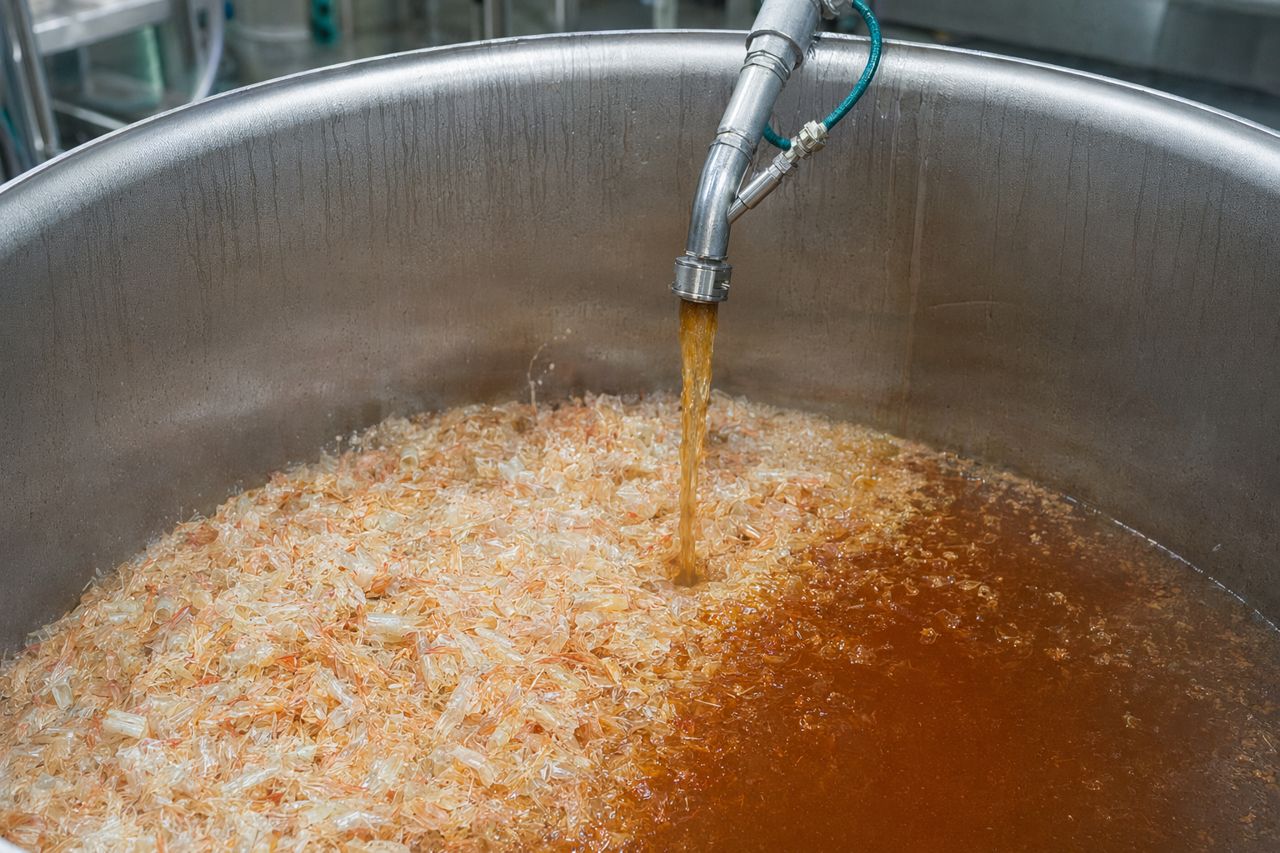
For shrimp shell processors, enzymes can improve the deproteinization step by helping release protein from the shell matrix under more controlled conditions. This can reduce reliance on harsh chemical intensity and support more consistent chitin quality when the process is properly designed.
The strongest value is operational:
- More stable deproteinization performance
- Lower protein carryover risk
- Reduced odor pressure from residual organics
- Better alignment with buyer specifications
- Potential for lower chemical load and easier wastewater management
- Improved batch consistency across variable shell inputs
Carapax Flow supplies enzyme solutions for shrimp shell processors that need practical deproteinization performance, dependable supply, and clear technical alignment with chitin buyer requirements.
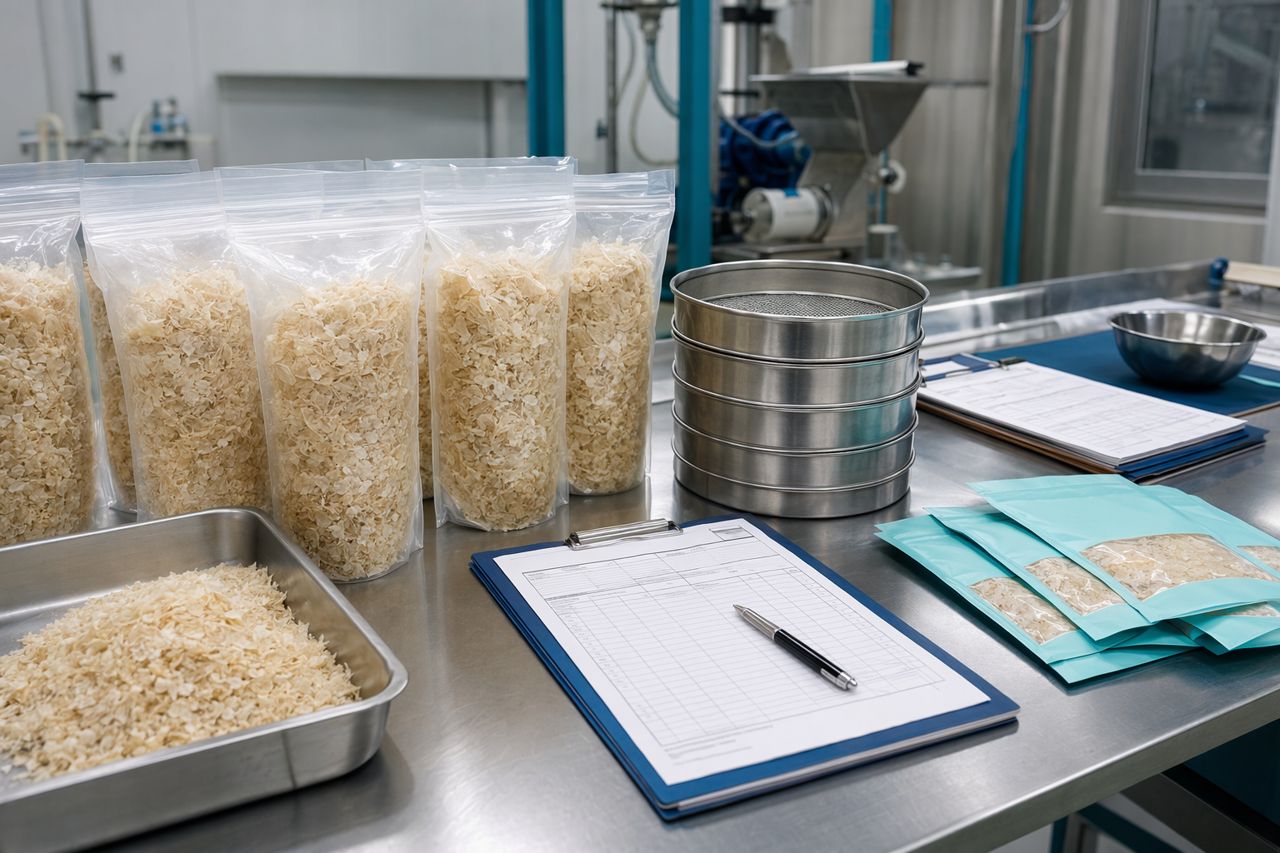
Pre-shipment checklist for chitin destined for chitosan
Before shipping chitin to a chitosan producer, confirm these points internally:
- Residual protein is within the buyer’s agreed range
- Mineral carryover is controlled and consistent
- Moisture is stable across the full lot
- Odor is clean and acceptable for storage and processing
- Color is consistent, with minimal dark specks or contamination
- Particle profile matches the buyer’s equipment needs
- Packaging protects against moisture pickup and breakage
- Lot documentation is complete and easy to retrieve
- Retained samples are stored for follow-up
- Any process deviation has a documented response
The supplier conversation should happen before the quality problem
Many chitin quality issues are not caused by one bad decision. They come from small process gaps: delayed shell handling, uneven dosing, poor separation, inconsistent washing, weak drying, or packaging that does not suit the route to the buyer.
A reliable enzyme program should be built around your plant reality: shell freshness, tank setup, heating and mixing limits, separation equipment, chemical steps, wastewater constraints, and target chitin specification.
Carapax Flow works with shrimp shell processing plants to match enzyme strategy with deproteinization goals, throughput targets, and buyer expectations before a commercial lot is at risk.
Request a quote
If you are tightening chitin specifications for chitosan customers, Carapax Flow can help scope an enzyme supply fit for your process.
Use the on-site request a quote form and share:
- Your shrimp shell input and seasonal variation
- Current deproteinization route
- Main chitin quality targets
- Throughput and batch structure
- Current pain points, such as odor, residual protein, chemical load, or batch inconsistency